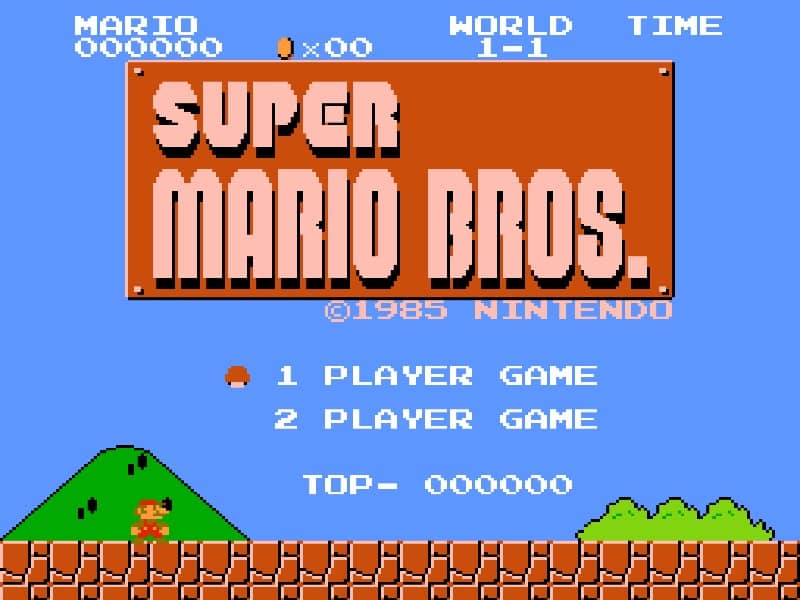
Super Mario Bros. NES Beginner Guide: Running, Jumping, and Safer Clears
Learn the original NES Super Mario Bros. controls, running jumps, power-up decisions, enemy timing, pipes, castles, and a simple practice plan for reaching later worlds.
What this guide helps you do
- How run speed changes jump distance
- When to preserve a power-up instead of rushing
- A safer method for pipes, gaps, and castles
Combine the run and jump buttons
The D-pad moves Mario, A jumps, and B makes him run or throw fireballs when powered up. Holding A produces a higher jump. Running before a jump increases horizontal distance, so many later gaps require B and A to be used together rather than as separate actions.
Practice in World 1-1 by running across safe ground, releasing B before an obstacle, and then repeating while holding B through the jump. The goal is to feel how momentum changes the landing point.
Use power-ups as extra chances
A Super Mushroom changes Mario into Super Mario and allows him to take another hit. A Fire Flower adds ranged fireballs while he remains powered up. Stars provide temporary invincibility, but pits and the stage timer remain dangerous.
Do not spend the extra hit carelessly. Slow down before blind drops, approach pipes from a position where an enemy cannot emerge into Mario, and use fireballs to remove threats before committing to a jump.
Read each obstacle before accelerating
The timer creates pressure, but most beginner mistakes come from entering the next obstacle too quickly. Check whether a Koopa shell will rebound, whether a platform is moving toward or away from the landing point, and whether a pipe has enough safe space on both sides.
In castles, fire bars and moving platforms repeat predictable cycles. Wait through one full cycle, choose a starting point, and make one clean movement rather than correcting several times in midair.
- Release the run button when precise platform placement matters more than speed.
- Stomp a Koopa only when there is room to avoid the shell afterward.
- Use the top of the flagpole as a bonus goal, not a reason to lose a life.
Practice for progress, not perfect score
On the first runs, aim to reach the next checkpoint or world with a power-up intact. Coins and hidden blocks are helpful, but survival teaches more of the level. Once a route is consistent, return to explore alternate pipes, blocks, and shortcuts.
Two-player mode is turn-based rather than simultaneous. Mario and Luigi alternate after a life is lost or a stage is cleared, so use the other player’s attempt to observe the next obstacle.
Sources and version notes
This guide applies to North American NES release (1985). Browser key mappings can differ from the original controller, so confirm the emulator overlay before using button-specific instructions.
Ready to practice?
Open the playable version, check its control overlay, and practice one section of this guide at a time.
Play Super Mario Bros.